

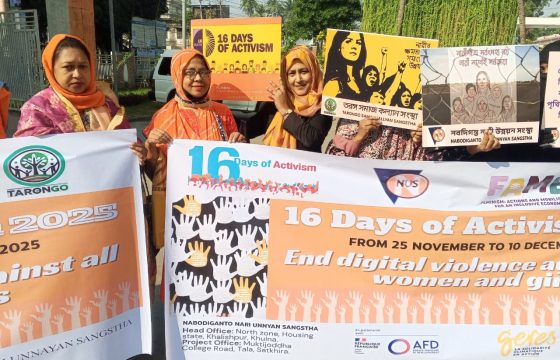

Every November 25, the international community mobilizes for the International Day for the Elimination of Violence Against Women. Established in 1999 by the UN, this date commemorates the courage of the Mirabal sisters, Dominican activists who were assassinated for resisting the dictatorship of Rafael Trujillo. Their struggle continues to resonate today, reminding us that violence against women remains one of the major obstacles to women’s freedom and rights around the world.
In this context, the FAME project supports feminist organizations working for women’s economic empowerment, in particular by taking action against the violence that hinders this process. Sexual, physical, and psychological violence, not to mention direct economic violence, limits women’s access to education, training, work, entrepreneurship, and control over their own resources. All these barriers have a direct impact on the socio-economic situation of women globally: on average, women are poorer than men, which makes them more vulnerable to sexual, physical, or psychological violence because it is more difficult for them to leave a violent situation.
By supporting women who want to create or develop economic initiatives, and by supporting organizations that defend their rights, FAME works to transform their lives in a sustainable way. By strengthening their economic power, the FAME project aims to break these cycles of vulnerability and pave the way for true autonomy, an essential condition for enabling every woman to live in safety and dignity and for ensuring that their contribution to the development of society is rewarded and a factor for growth. Overview of various initiatives supported by FAME…
Benin: deconstructing norms and transforming mindsets
In Benin, the CSO Women Hope is implementing the FEFEA (Women Entrepreneurs, Economically Independent Women) project. Its objective is to strengthen the economic empowerment of women and girls in vulnerable situations in the commune of Ouidah. To achieve this, it seeks in particular to deconstruct the socio-cultural norms that hinder their emancipation. With this in mind, Women Hope has mobilized the community’s traditional authorities and the husbands of the women targeted to become allies and sources of support. The organization has held 56 reflective dialogue sessions, bringing together 173 men to discuss key issues such as men’s involvement in women’s empowerment and their role in combating gender inequality. These actions promote collective awareness and strengthen a social environment conducive to women’s emancipation.
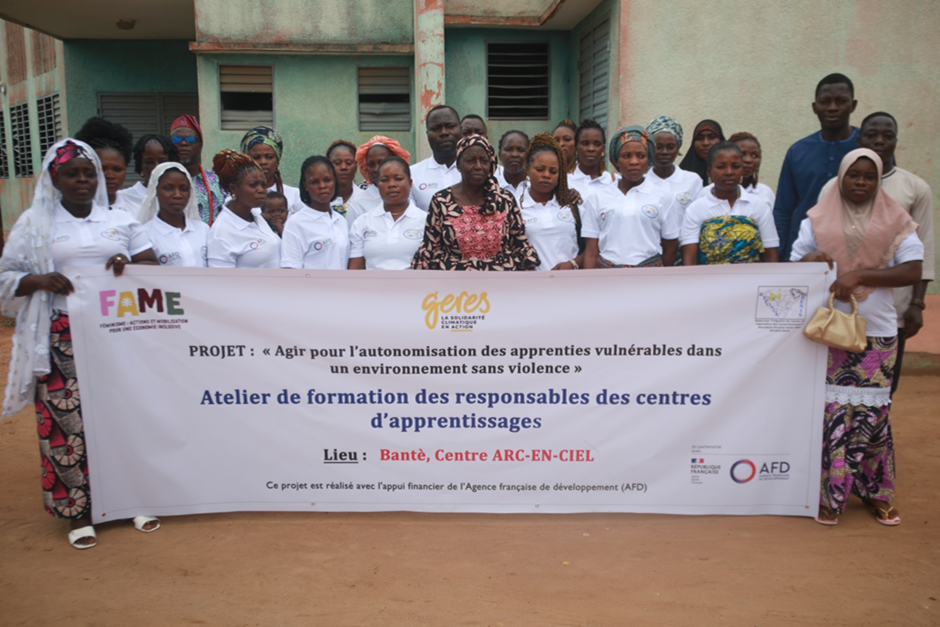
The CSO RIFONGA Benin is leading the project “Acting for the empowerment of vulnerable girls and young women apprentices in a violence-free environment.” The CSO has observed that in the apprenticeship environment, there is a culture of silence around sexual violence perpetrated by men against young female apprentices, both in school and in the workplace. Unaware of their rights or of where to turn to report violence, young girls have no choice but to endure this violence or abandon their career plans. To combat this scourge, two forum theater sessions were organized in Bantè and Bonou, reaching 116 people (40 men and 76 women). They focused on Beninese laws relating to the protection of women and the punishment of gender-based violence. In addition, 25 workshop managers were trained in the legal frameworks for the protection of young girls in apprenticeships, in order to ensure a safer and more protective training environment. This session focused on: the different forms of gender-based violence, particularly violence against women and girls (VAWG); the root causes and multifaceted consequences of such violence; mechanisms of recourse for victims; and the existing legal framework.
Togo: Revealing, Listening, Rebuilding – Femmes de Demain
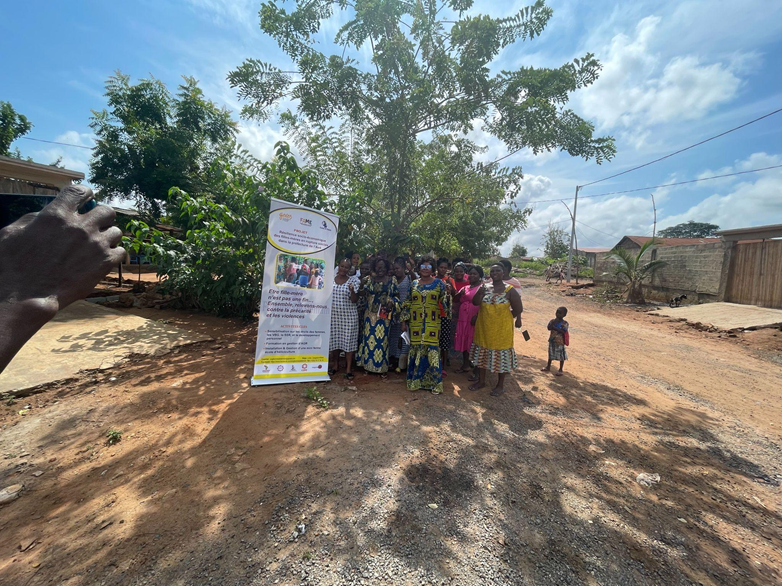
In Togo, the CSO Femmes de Demain trained and raised awareness among 30 women and teenage mothers who were victims of gender-based violence, both in their families and within their communities. In a context where socio-cultural constraints render such violence invisible or trivialized, these sessions enabled participants to put into words realities that had long been silenced.
They became aware of different forms of violence that they had sometimes endured for years. These training sessions enabled them to truly realize the seriousness of these acts and to acknowledge what they had endured in silence for so long. Physical violence, rape of minors, incest, and forced marriages were discussed, for the first time for many of them. In the absence of a culture of reporting, many of them carried these traumas in silence, their bodies themselves bearing witness to the suffering they had endured. Thanks to the training sessions, they were able to recognize this violence, understand their rights, and reconnect with their ability to take action.
To strengthen the economic autonomy of the participants, Femmes de Demain supported the establishment of a snail farming activity, designed to guarantee them a stable and sustainable source of income. This initiative aims to offer them a concrete means of escaping financial dependence, while contributing to soil restoration after a two-year cycle, making it an economic, social, and environmental solution.
This initiative takes on its full meaning when we remember that one of the most widespread—and yet one of the most invisible—forms of violence is socioeconomic violence. It manifests itself in particular by depriving women of their income, preventing them from earning a living by confining them to the status of “housewife” or unpaid work, or even restricting their access to work through targeted physical violence. These mechanisms of control perpetuate forced economic dependence, which limits women’s ability to protect themselves, plan for the future, and rebuild their lives.
In Morocco: when economic dependence traps women in violence
In Morocco, many women who are victims of domestic violence remain trapped in these situations because of their economic dependence. Poverty, combined with societal beliefs that trivialize or minimize violence, often forces them to resign themselves to their situation, as they lack the resources to support themselves and their children.
It is in this context that the Yasmine Project – For Independent and Happy Women, led by the AMAFF (Moroccan Association for Support for Women and Families), was created. Currently underway in Casablanca, the project aims to gradually expand to other regions of the country in order to reach more women. Its central objective is clear: to promote the sustainable empowerment of women and girls who are victims of violence by offering them tailored, comprehensive, and ongoing support. To address these issues, the project is structured around several complementary components: social support aimed at identifying the skills of beneficiaries and encouraging the emergence of eco-responsible projects; vocational training tailored to the needs, interests, and abilities of each individual; entrepreneurial workshops including personal development (self-esteem, communication), marketing techniques, and the basics of entrepreneurship; individual support to help create or consolidate eco-friendly entrepreneurial activities; round tables dedicated to women’s rights and the links between gender justice and environmental protection.
The following testimonials illustrate the strength, determination, and resilience of the women supported by the Yasmine project. They recount their journeys, their challenges, and how they are gradually rebuilding their autonomy.
Rabiaa’s story
Rabiaa’s story is one of profound transformation. She faced economic and psychological violence, family breakdown, low self-esteem, and difficulties in managing her emotions, particularly her anger.
Despite these challenges, she made the courageous choice to take back control of her life, driven by a desire for independence and full awareness. Thanks to the ongoing support of the association’s specialized team, she has regained psychological and family balance, while gradually building her economic empowerment e . She has regained her self-confidence to the point where she has become a true source of inspiration for other women. Driven by the desire to pass on what she has learned, she has committed to supporting other beneficiaries by supervising training courses and leading workshops dedicated to the economic empowerment of women who are victims of violence and in vulnerable situations.
Today, her journey of sharing continues. Rabiaa embodies the idea that support does not stop with the recipient: it becomes an energy that is passed on and gives hope to every woman seeking to transform her life for the better. An authentic testimony that reflects strength, perseverance, and the deep conviction that a new beginning always starts with an act of courage.
Testimonial from Nadia
Nadia was a woman like so many others, driven by simple ambitions and the hope for a better future. Her life was not without difficulties, but she believed that the best was always possible. After a long period of hardship, Nadia realized that giving up was not inevitable. She discovered that true strength often lies in finding balance and having the courage to ask for help. This gesture was not a sign of weakness, but a first step toward healing. Her desire for change was not limited to protecting herself: it also aimed to offer a more secure future for her family.
Thanks to the psychological and social support provided by the association, Nadia was able to break out of the cycle of suffering in which she was trapped and rebuild a new reality for herself and her loved ones. Her journey is a powerful reminder that change is possible and that giving up is never the only option. She reminds all women going through difficult times that they are not alone. There will always be a listening ear and a helping hand to support you. Change often begins with a single step—sometimes small, but decisive—and Nadia is the best proof of this.
In Latin America and Asia, feminist organizations are committed to 16 Days of Activism for Gender Justice and Against Gender-Based Violence.
Focus on the actions of the Centro de Investigación para la Acción Femenina (CIPAF) in the Dominican Republic
As part of the “Advocacy for Equity” project, CIPAF is conducting 16 days of activism for justice and against gender-based violence, with strategic actions that combine political advocacy, transformative education, and social mobilization.
The feminist organization reminds us that equality between men and women opens up space for men who care, men who express their emotions, and men who share responsibilities at home. When equality exists, levels of violence decrease, everyone’s mental health improves, and fairer and freer relationships are created.
On November 24, a session will be held in the Senate of the Republic alongside international expert Miguel Lorente Acosta, former Spanish Government Delegate for Gender Violence. On the 25th, a meeting will be held with actors from the judicial system to strengthen institutional responses, followed by a conference on “Education for the eradication of the culture of violence,” open to the public at the UASD. The results of ten months of monitoring media coverage of gender-based violence in the Dominican media will also be presented, a key element in combating misinformation. The mobilization will conclude on November 30 with a national appeal launched by the feminist movement.
Focus on the actions of PURNIMA, Sarbojanin Unnayan Sangstha (SUNS) and Nabodigonto Nari Unnayan Sangstha (NNUS) in Bangladesh
16 Days of Activism in Bangladesh:
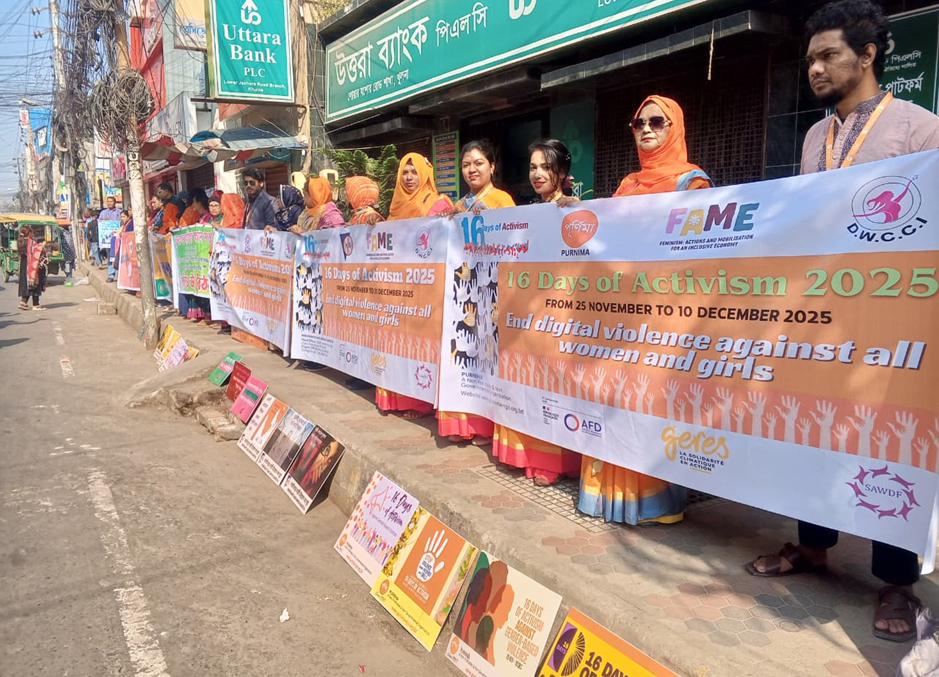
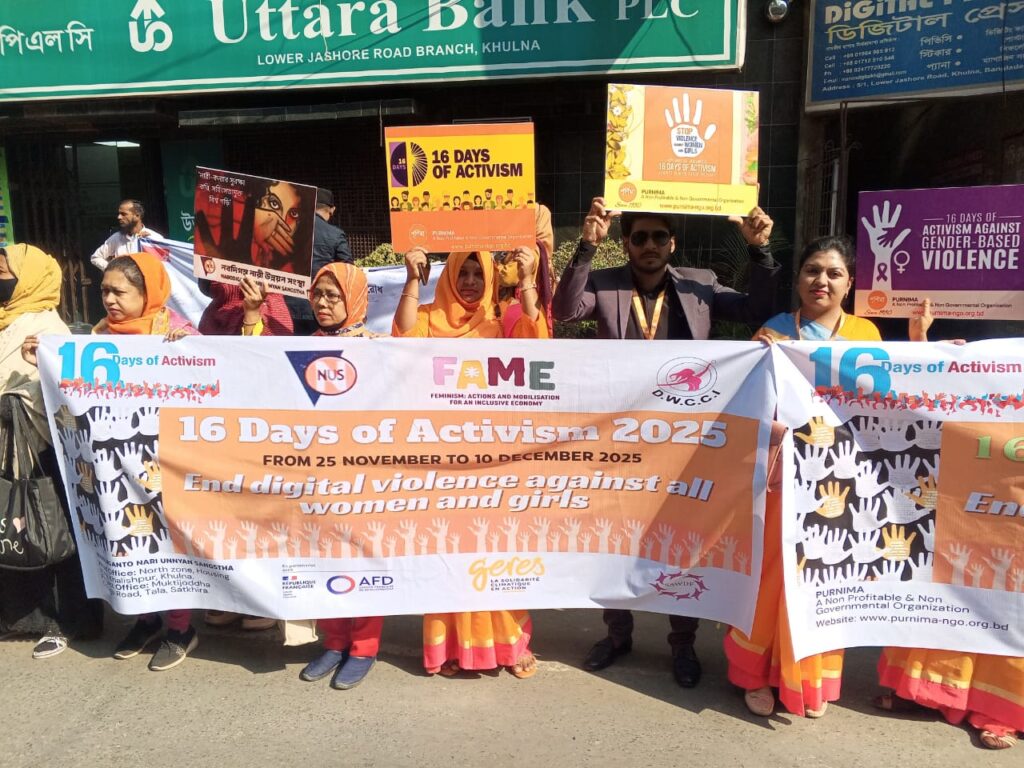
In Khulna, Bangladesh, the Day was commemorated with a significant event organized by PURNIMA, Sarbojanin Unnayan Sangstha (SUNS) and Nabodigonto Nari Unnayan Sangstha (NNUS).
Representatives from local NGOs, young people, journalists, and residents participated.
The ceremony began with a balloon release symbolizing hope and commitment against violence against women and girls, followed by a human chain and an awareness-raising rally that passed through several neighborhoods in the city.
The organizers announced that during the 16 Days of Activism, numerous activities will be organized, including awareness-raising sessions, community dialogues, youth initiatives, and advocacy actions in Khulna and neighboring districts to raise awareness, support survivors, and encourage collective action against gender-based violence.
The joint initiative by PURNIMA, Sarbojanin Unnayan Sangstha, and Nabodigonto Nari Unnayan Sangstha demonstrates a strong commitment to a more just, inclusive, and violence-free society. As the campaign progresses, the three organizations are calling on citizens—especially men and boys—to mobilize as allies to promote dignity, respect, and equality for women and girls throughout Bangladesh.
To learn more, Empow’Her invites you to explore several of its online resources:
These various actions remind us that for feminist organizations around the world, there can be no economic empowerment for women without the fight for equality and as long as gender-based violence persists.
With the FAME project, let’s contribute to the eradication of gender-based violence for fairer and more prosperous societies for all!

