
In Pakistan, entrepreneurship among women is gaining momentum through innovative initiatives that not only empower women economically but also provide them with essential skills, networks, and confidence to thrive in competitive markets. During Quarter 1 of 2025, multiple Civil Society Organizations (CSOs) implemented impactful projects targeting women across diverse regions and communities, offering concrete opportunities for skill development, income generation, and social empowerment.
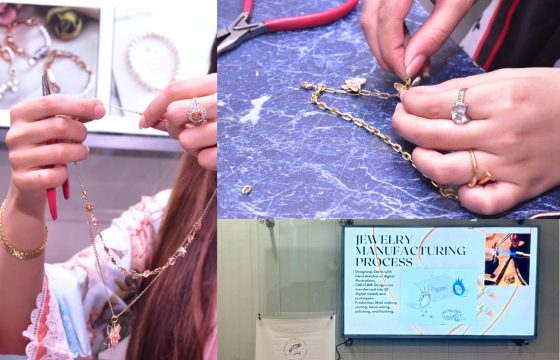
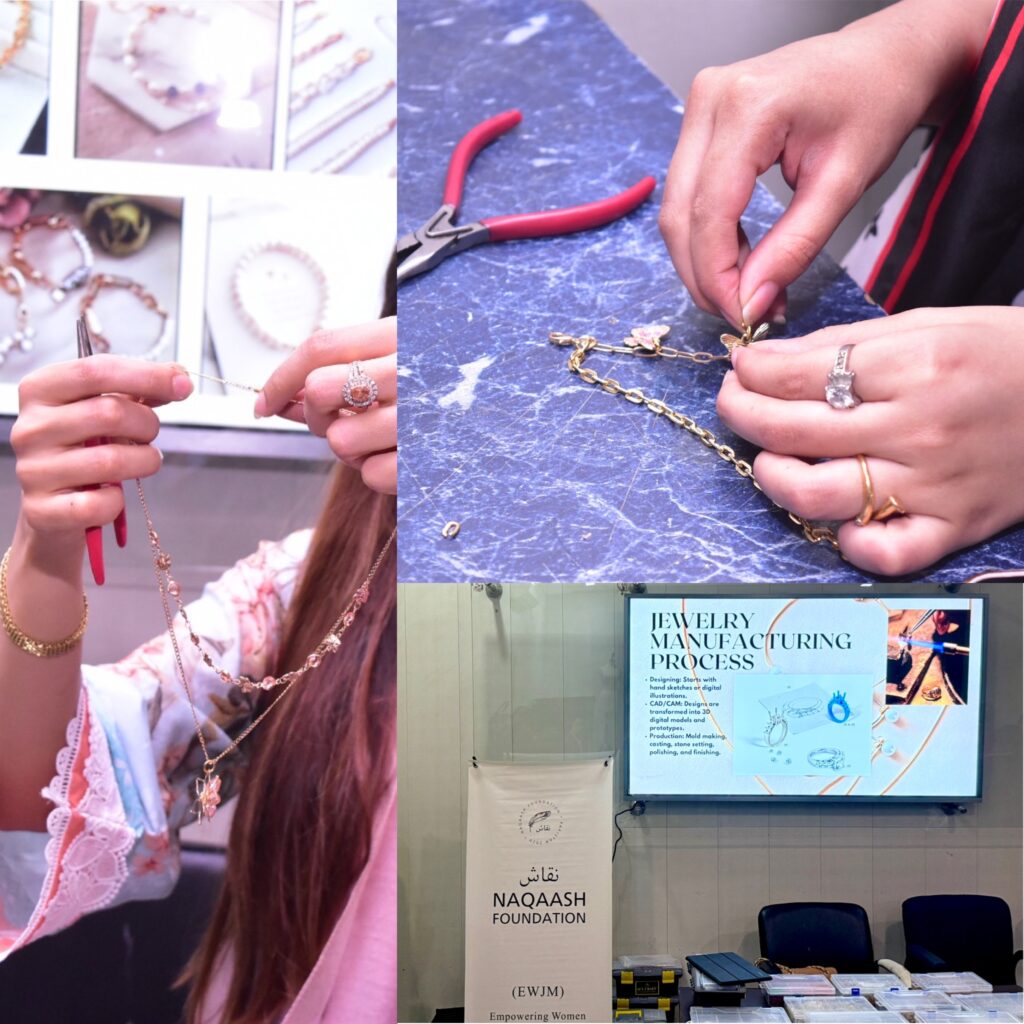
One such initiative was led by Naqaash Foundation under the Empowering Women through Jewelry Making (EWJM) project. Training sessions were conducted at the University of South Asia (14–15 May 2025) and the University of Home Economics (16 & 22 May 2025), engaging approximately 65–75 women aged 20–40 years from middle and lower-middle-class backgrounds. Participants learned the art of costume jewelry and accessory making, alongside marketing skills based on the 4Ps framework. By the end of the training, several women expressed interest in establishing their own home-based jewelry ventures, demonstrating tangible outcomes in terms of income generation and entrepreneurial initiative. What makes this initiative particularly innovative is its focus on women who often face mobility and cultural restrictions, enabling them to work from home while building sustainable businesses.
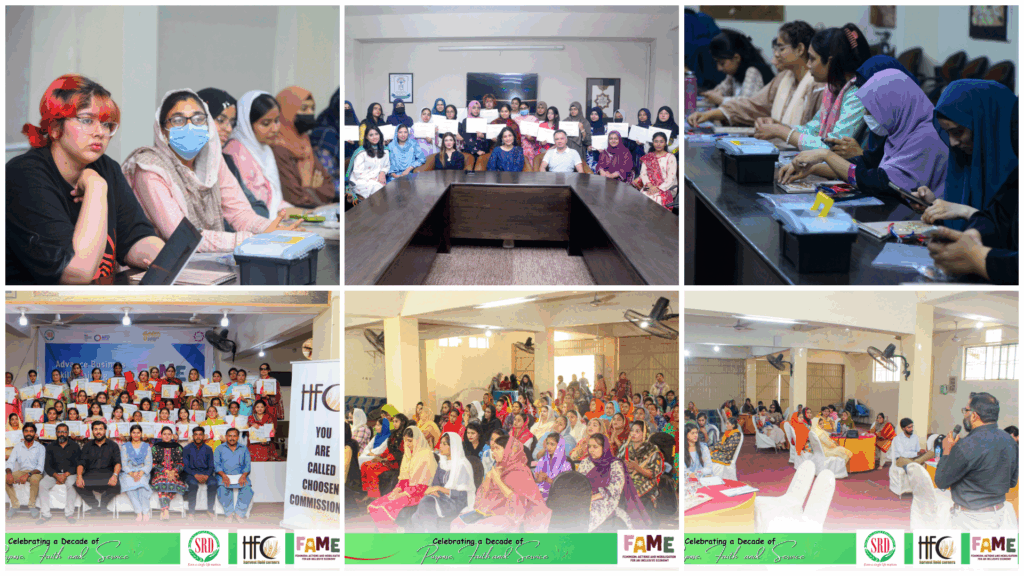
Another pioneering initiative was undertaken by SRD through its Women Empowerment Through Skill Enhancement project. Two large awareness seminars were held between March and June 2025 in Rawalpindi and Islamabad, reaching 235 women participants. These sessions introduced women to digital tools, e-commerce platforms, and online income opportunities, enabling them to start entrepreneurial activities in the online marketplace. In addition, SRD participated in a 2-day Technology & Entrepreneurship Summit, further expanding the participants’ networks and access to potential business collaborations. The innovative aspect of SRD’s initiative lies in equipping women with digital skills in a country where access to technology and online platforms is often limited for women, particularly those from marginalized communities.
The Facilitation Alliance (FA) implemented the Kissan Ki Beti project, focusing on rural women and smallholder farmers. During the first quarter of the project, FA conducted two major mobilization sessions, one with civil society representatives and another with rural women beneficiaries, to introduce concepts of value addition in agriculture and reduce post-harvest losses. These sessions were held at the University of Layyah and the Muhammad Ali Institute of Science & Technology, engaging over 50 women and stakeholders. The sessions also included a Training of Trainers (ToT) program for machine operation, preparing women to manage value-addition activities independently. What makes this initiative innovative is that it reaches women in rural areas who are rarely supported with skill-building programs, combining technical skills with entrepreneurship opportunities in agriculture.
Finally, GIA launched the Eco Dignity project, targeting Khawaja Sira community members and other marginalized groups in urban areas. During the first quarter, the organization conducted two community awareness sessions with over 75 participants, alongside procurement and installation of eco-friendly production equipment. Twenty participants were shortlisted for the first training batch starting in mid-July 2025, which will equip them with skills to produce and sell sustainable products. This initiative is innovative because it targets individuals who are often excluded from mainstream economic opportunities, providing them not only with livelihood skills but also with environmentally sustainable production techniques.
These initiatives collectively demonstrate a transformative approach to women’s entrepreneurship in Pakistan. Across the first quarter of implementation of the projects, over 400 women and marginalized community members were directly reached through training, awareness sessions, and skill-building programs. The concrete results include the creation of small businesses, development of digital and marketing skills, and increased economic independence for participants.
What makes these initiatives stand out is their focus on inclusivity, sustainability, and innovation. They target women and marginalized groups who are traditionally underrepresented in entrepreneurial programs, provide practical skills that can generate immediate income, and in some cases, such as GIA’s Eco Dignity project, integrate environmental sustainability into the economic model. Beyond income generation, these programs help women and gender minority groups to gain confidence, expand their networks, and engage with institutions and markets that were previously inaccessible to them.
As Pakistan celebrates International Women’s Entrepreneurship Day, these projects exemplify how strategic skill development, targeted support, and innovative approaches can transform women’s economic participation. Through continued collaboration with FAME and other partners, these CSOs are paving the way for a future where more women can lead sustainable businesses, inspire their communities, and contribute meaningfully to the economy.