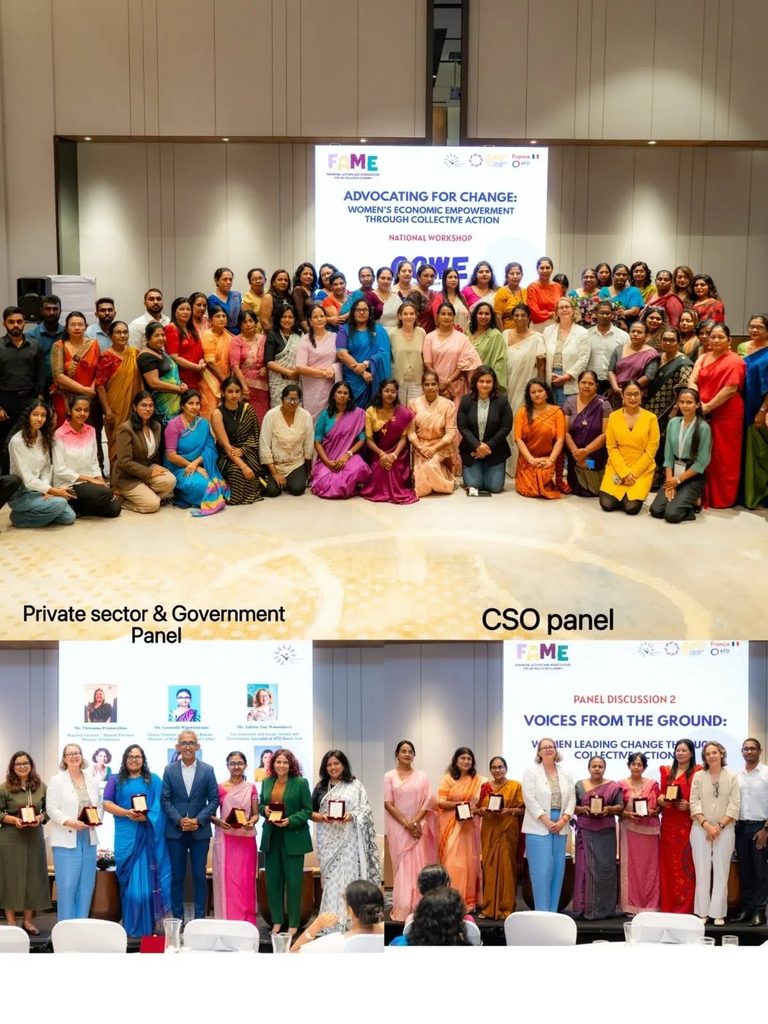

25 August 2026 | Colombo, Sri Lanka
As part of its Window 3 focus on advocacy and policy change, the FAME – Feminisms: Actions and Mobilisations for an Inclusive Economy programme brought together diverse stakeholders in Sri Lanka to advance collective action for women’s economic empowerment.
On 25 August 2026, the Ceylon Chamber of Women Entrepreneurs (CCWE), in collaboration with the University of Kelaniya, convened the national workshop “Advocating for Change: Women’s Economic Empowerment through Collective Action.” The event brought together policymakers, development partners, private-sector representatives, academics, civil society organisations and women entrepreneurs to discuss how evidence, lived experiences and collective action can contribute to a more inclusive and enabling environment for women entrepreneurs in Sri Lanka.
In its advocacy work, FAME supports partners and civil society organisations to strengthen their capacity to engage in policy dialogue and contribute to changes that advance women’s economic empowerment.
Bringing evidence and lived experiences into policy dialogue
The national workshop created a space for different perspectives to come together: institutional and policy-level experiences, research evidence, private-sector perspectives and the lived realities of women entrepreneurs, particularly those working at community and provincial levels.
Welcoming participants, Dr. Ayanthi Gurusinghe, President of CCWE, highlighted that women’s economic empowerment requires more than isolated interventions or training programmes. She stressed the importance of connecting women entrepreneurs with finance, technology, markets, knowledge, networks and decision-making institutions, while ensuring that women’s voices are represented in national policy discussions.
She also underlined the importance of collective action between government institutions, development partners, academia, the private sector, women’s organisations and community-based organisations to create meaningful and sustainable economic opportunities for women.
Strengthening partnerships for inclusive economic development
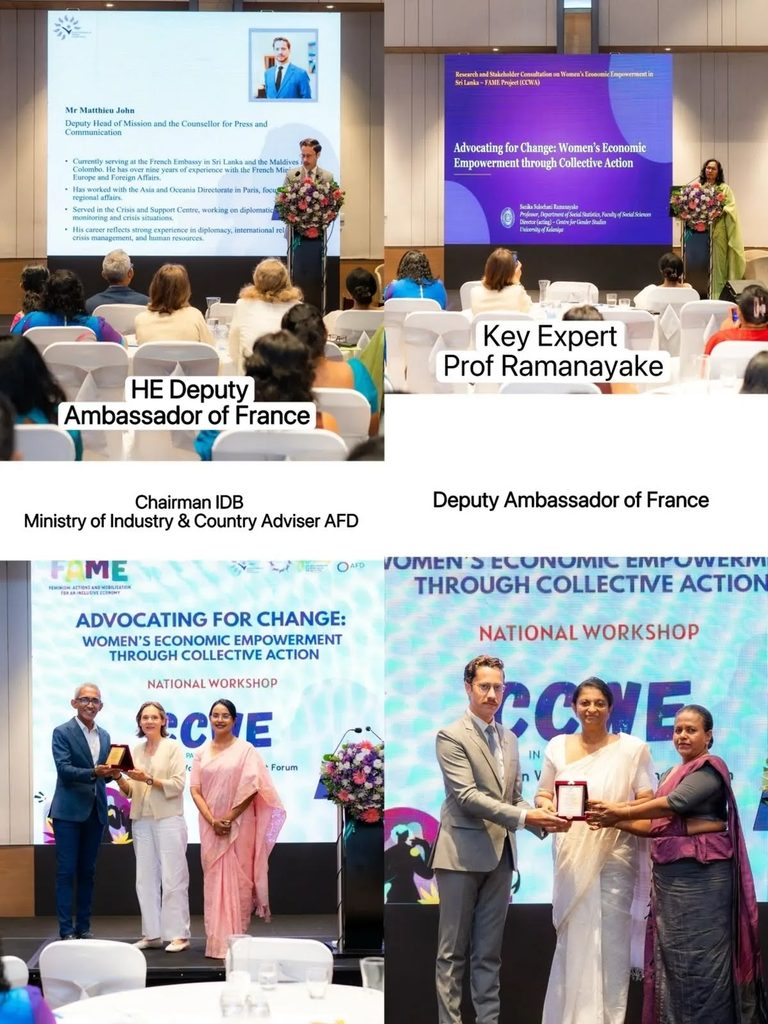
Mr. Matthieu John, Deputy Ambassador of the Embassy of France, highlighted the importance of partnerships in advancing inclusive economic development and reflected on the contribution of the FAME partnership in Sri Lanka.
He emphasised the importance of strengthening women’s participation in economic decision-making and creating conditions that enable women not only to establish businesses, but also to build sustainable enterprises that contribute to employment, innovation and economic development.
The participation of France and AFD in FAME reflects the importance of international development partnerships that support locally led initiatives, research, advocacy and collective action for women’s economic empowerment.
Creating an enabling ecosystem for women entrepreneurs
Delivering the keynote address, Mr. Yasas Hewage, Chairman of the Industrial Development Board (IDB), focused on the importance of creating an enabling ecosystem in which women entrepreneurs can move beyond micro and livelihood-based activities towards sustainable and growth-oriented businesses.
He highlighted the role of enterprise-development institutions in improving access to technical knowledge, technology, productivity enhancement, business-development services, finance and markets.
He also stressed that supporting women-owned enterprises should be understood not only as a gender or social-development priority, but as an integral part of Sri Lanka’s broader industrial and economic development.
From policy to progress
The first panel, “From Policy to Progress: Building an Enabling Ecosystem for Women Entrepreneurs,” brought together representatives from government, the private sector and AFD to examine how policies and institutional mechanisms can better support women entrepreneurs.
The panel featured Mrs. Jayanthi Hewakuruppu, Deputy Director of Development, Ministry of Women and Child Affairs; Ms. Tania Polonnowita Wettimuny, Group Managing Director of IAS Holdings (Pvt) Ltd; Ms. Niluka Weligamage, Founder and CEO of DAZZLE; and Ms. Juliette Van Wassenhove, Gender Specialist at AFD.
The discussion highlighted the need for stronger coordination between government, development partners, financial institutions and the private sector, as well as for policies and programmes to translate into measurable improvements in women’s businesses.
These include greater business sustainability, increased income and productivity, employment creation, improved market access and stronger pathways for women entrepreneurs to move from micro-enterprises towards competitive and sustainable businesses.
Voices from the ground: women leading change
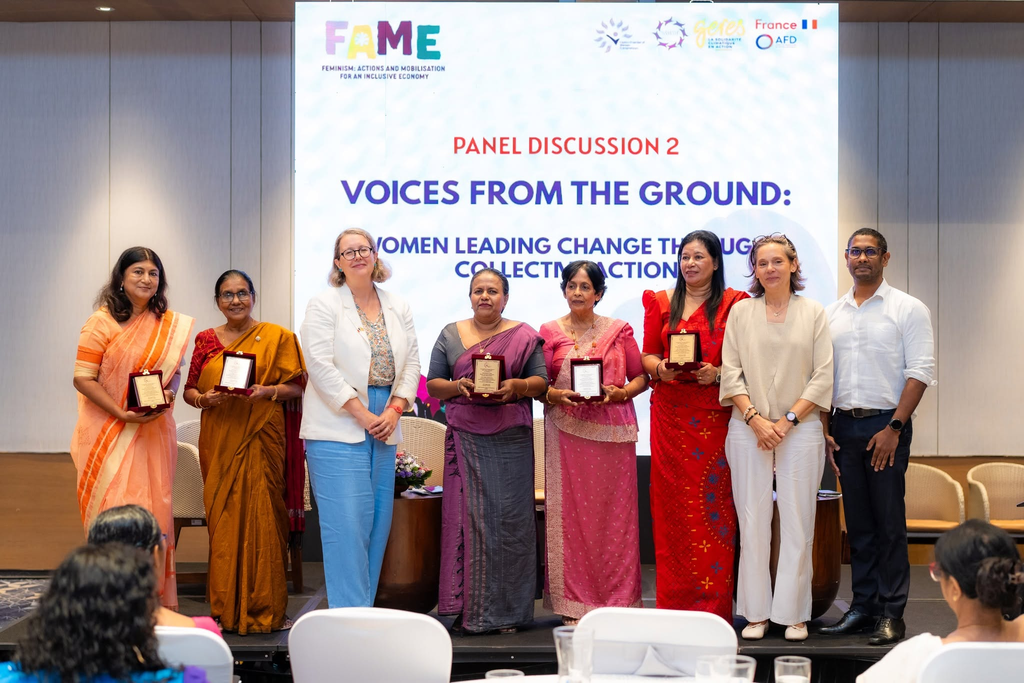
The second panel, “Voices from the Ground: Women Leading Change through Collective Action,” brought grassroots perspectives into the national policy dialogue.
Ms. Kanthi Mdagammana, President of CPWCIC; Ms. Nilanthi Perera, President of DDS; Ms. Daya Dadallage, President of RRWO; and Ms. Ramya Kumuduni, President of KNDS shared experiences of women entrepreneurs working at community and provincial levels, including in areas beyond Sri Lanka’s main commercial centres.
The discussion highlighted the importance of a bottom-up approach to policy development, ensuring that the experiences of women entrepreneurs from different regions are reflected in national decision-making.
A key message emerging from the discussion was that women entrepreneurs should not only be considered beneficiaries of policies and programmes, but also active partners in their design, implementation and evaluation.
Strengthening links between grassroots organisations and national institutions was identified as an important pathway towards more responsive and sustainable policy change.
Evidence for change
Prof. Sanika Sulochani Ramanayake, Professor in the Department of Social Statistics and Acting Director of the Centre for Gender Studies at the University of Kelaniya, presented research findings on the barriers and opportunities affecting women entrepreneurs in Sri Lanka.
The research highlighted the importance of an ecosystem approach, in which access to finance, skills, technology, formalisation, markets, networks and institutional support are addressed in a connected way rather than through isolated interventions.
The findings also reinforced the importance of evidence-based advocacy, ensuring that policy discussions are informed by both research and the experiences of women entrepreneurs from diverse regions and socio-economic backgrounds.
From dialogue to collective action
The workshop concluded with a call for continued coordination and collective action among government institutions, development partners, financial institutions, academia, the private sector, women’s organisations and entrepreneurs.
Several priorities emerged from the discussions, including:
From dialogue to collective action
The workshop concluded with a call for continued coordination and collective action among government institutions, development partners, financial institutions, academia, the private sector, women’s organisations and entrepreneurs.
Several priorities emerged from the discussions, including:
- strengthening women’s access to finance and markets;
- improving access to technology, digital tools and business-development support;
- creating stronger pathways from micro-enterprises towards sustainable business growth;
- strengthening coordination between institutions and stakeholders;
- expanding opportunities for women entrepreneurs beyond Colombo and other major commercial centres; and
- ensuring that women entrepreneurs have a stronger voice in policy and economic decision-making.
For FAME, the workshop represents an important step in the programme’s advocacy and policy-change work, bringing together evidence, grassroots perspectives and institutional actors to identify pathways towards more inclusive economic systems.
CCWE and its partners will continue building on this dialogue to transform evidence and lived experiences into practical recommendations and collective advocacy for policy and institutional change.
The workshop reaffirmed a central message: women’s economic empowerment is not only a women’s issue. It is an essential part of inclusive economic development, industrial growth and long-term prosperity in Sri Lanka.