


Rural Women as Agents of Change for Climate Action and the Local Economy
The feminist forum “Avec nous, pour toustes” (With Us, for Everyone), held on Tuesday, October 21, 2025, in Paris, served as a transnational space for dialogue and mobilization, giving a voice to activists from the Global South and partner organizations. Through roundtable discussions, exchanges, and artistic performances, the event highlighted critical issues often overlooked in institutional discussions: economic and social justice, climate justice, the fight against gender-based violence, and sexual and reproductive rights and health.
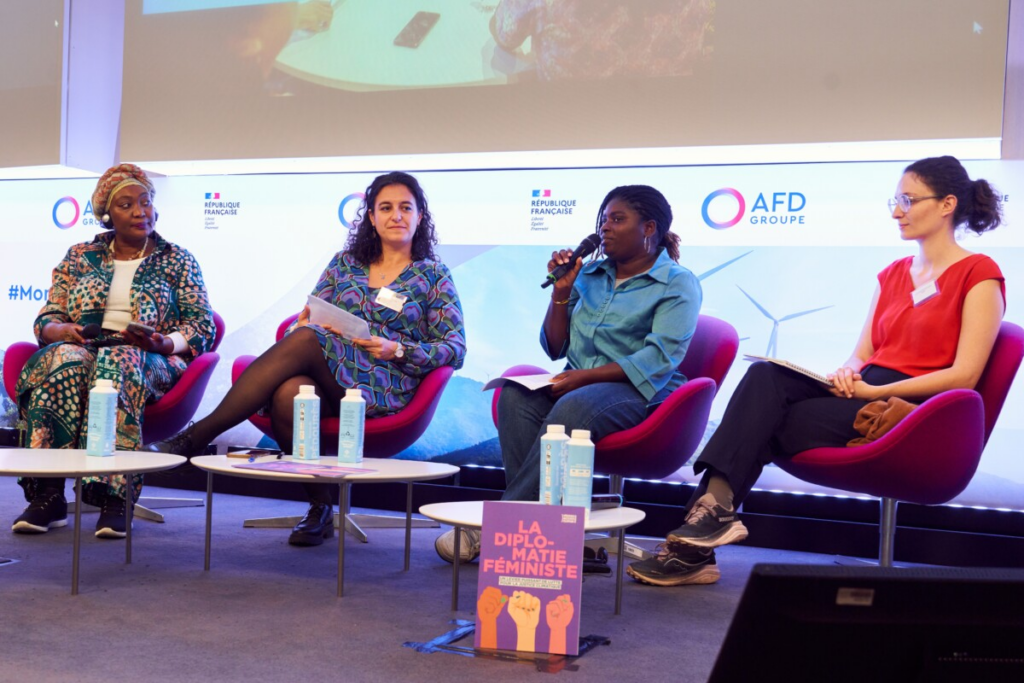
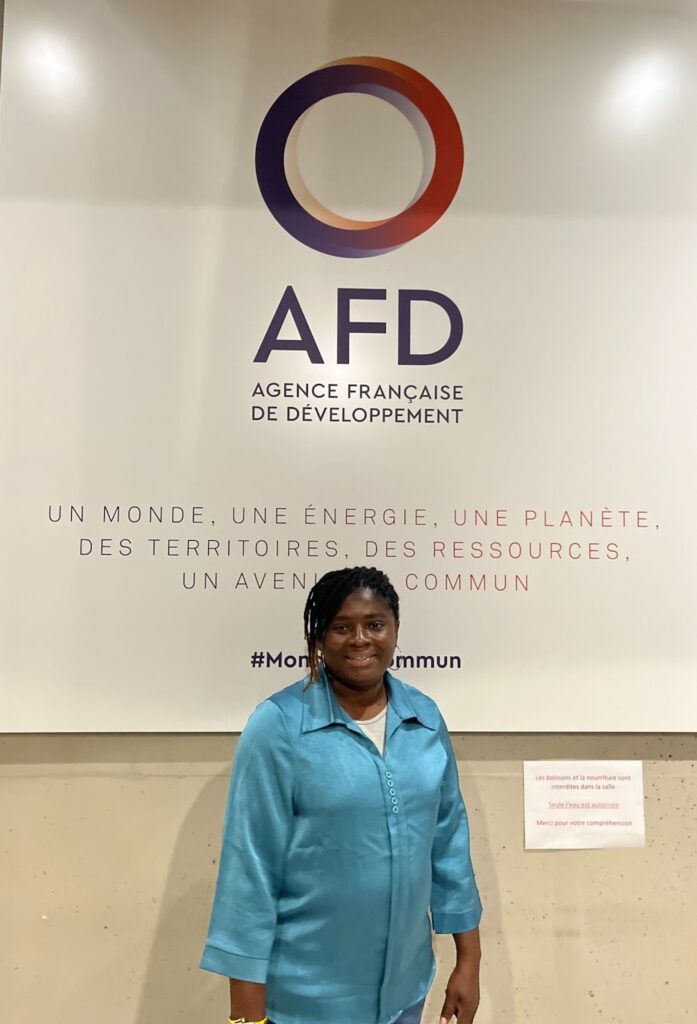
As part of this forum, Elham Aghakhani, Inclusion Program Assistant at Geres, met with Delali Adedje, director of the Yokoumi association and cooperative, which is supported by Geres in Togo as part of the FAME project. It was an opportunity to discuss her commitment and her journey with Yokoumi in Togo.
Can you tell us about your background and the key milestones in your professional career?
I hold a bachelor’s degree in development economics. I began my career by volunteering with a humanitarian organization, which allowed me to make a long-term commitment to this sector. In 2019, I helped found the Yokoumi association in Togo, with the goal of supporting the economic empowerment of rural women.
How long have you been working in the field, and with which communities do you work?
Since 2019, I’ve been working with women in the shea industry in central Togo, located about 345 km from the capital. Today, more than 350 women are part of this journey with us. We work with women who collect shea nuts from about seven villages in the central region, and we also work with the women who process the nuts into shea butter. We support them in restructuring the sector, which is their main source of income.
Can you tell us about the project supported by the FAME program and its main objectives?
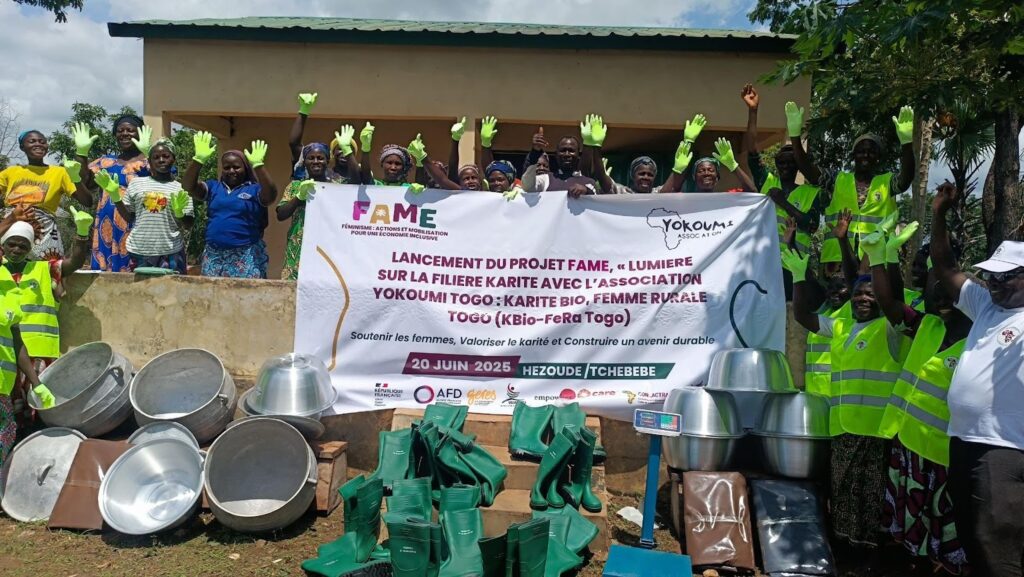
The “Organic Shea, Empowered Rural Women” project is funded by the FAME program. We are currently working to restructure the shea supply chain to give it new momentum . The main objective is to improve production traceability, from the collection of shea nuts in the forest to the processing of the kernels into shea butter.
The women collect the nuts, process the kernels, and then the butter is produced at the Yokoumi facility in Sokodé, where more than 50 women processors work on a regular basis.
Thanks to the project, we have been able to set up collection points, allowing us to centralize the collection of shea kernels, improve the quality of raw materials, and increase production capacity. This helps make the supply chain more responsible and better structured, and strengthens the economic autonomy of the women engaged in this income-generating activity.
How did FAME funding facilitate the project’s development?
FAME funding has significantly strengthened the business.
Over the previous two years, we had observed a decline in production, largely due to issues with the quality of raw materials.
The FAME project helped us establish a dedicated collection center in Yokoumi , ensuring higher product quality and making the processors’ work easier through the purchase of machinery (shelling machines) and protective equipment. This now allows us to increase our production capacity, improve the incomes of women who collect and process shea butter, while contributing to the fight against climate change and the sustainable development of Yokoumi’s activities. We place a strong emphasis on training women so they can fully benefit from the project’s achievements.
What does participating in the Feminist Forum mean to you?
This forum is an important opportunity to share Yokoumi’s experience, particularly regarding gender and climate solutions. The goal is to demonstrate that the small actions taken by women in the most remote rural areas are essential and must be recognized.
These actions contribute to the development of local communities and to income generation, and they demonstrate that women are not merely victims of climate change but are also active agents of solutions, capable of proposing sustainable alternatives, particularly in the areas of clean energy and climate resilience.
What message would you like to convey to feminist partners and support organizations?
It is essential to highlight the efforts of women in rural areas.
Local initiatives foster community development, build women’ , and empower them to gain awareness of their situation so they can find solutions to sustainably improve their living conditions.

