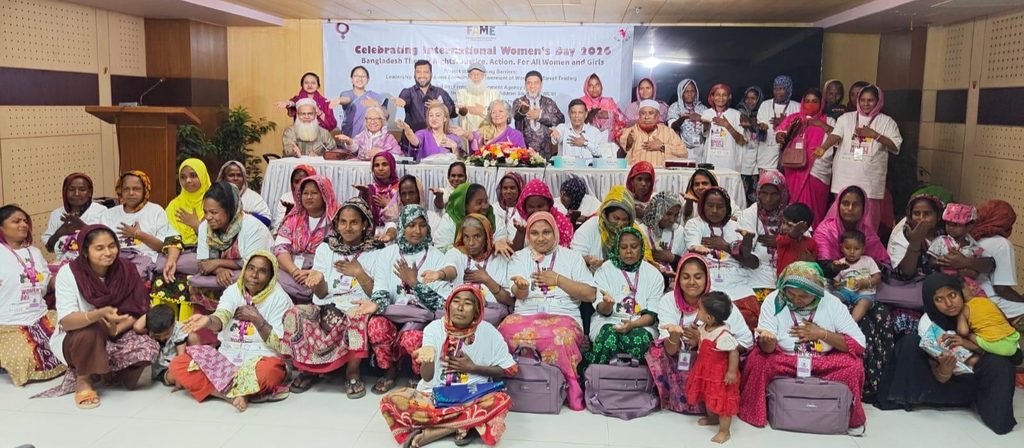

On Women’s Entrepreneurship Day, Dhaka Women Chamber of Commerce & Industry (DWCCI) highlights the stories of women building their own businesses and the local organisations supporting their journeys towards economic independence.
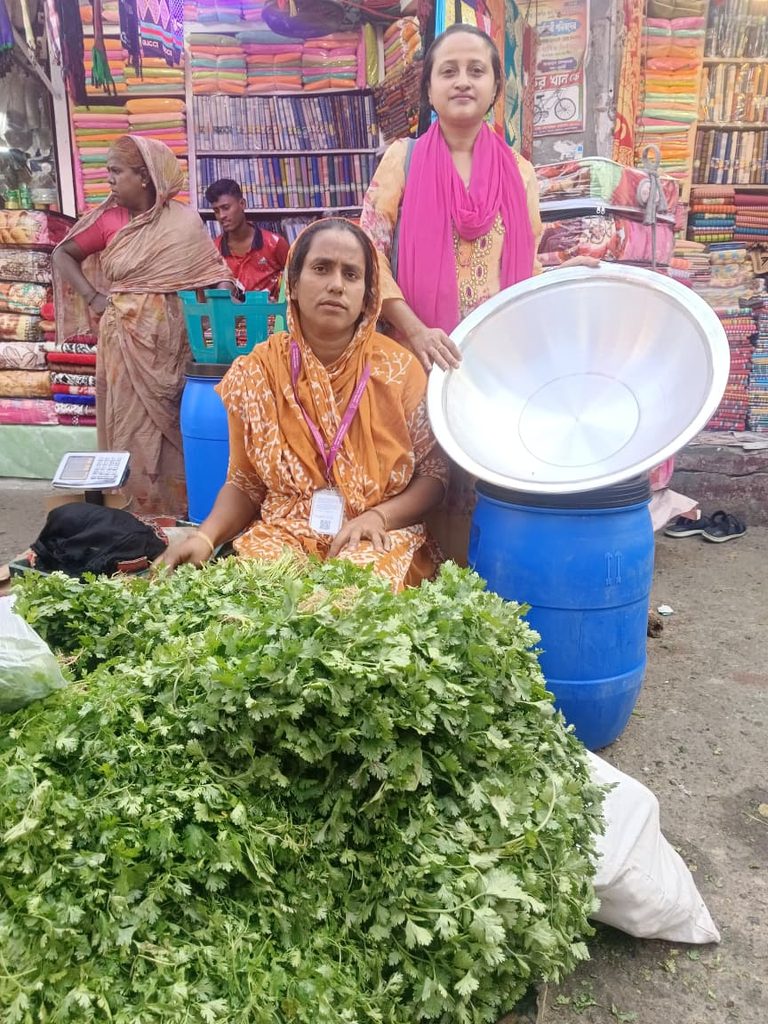
When Nargis first started selling coriander leaves at Karwan Bazar, one of Dhaka’s busiest markets, she had just BDT 1,200 borrowed from a relative. Despite working long hours, limited capital and daily business expenses made it difficult to earn enough to support her family, particularly her two daughters’ education.
Running a small business in a busy market also came with expenses that reduced what she could take home. For Nargis, this included paying BDT 50 every day (€ 0.36) to rent a drum for transporting her vegetables. With limited resources, even such a modest daily expense made a difference.
Her circumstances began to improve after receiving support from the Centre for Women and Children Studies (CWCS). Through its Breaking Barriers initiative, Nargis participated in a two-day training programme covering business planning, women’s rights, gender equality, leadership and economic empowerment. She also received business materials suited to her needs, including coriander leaves, a PVC drum and an aluminium plate.
The materials helped her reduce operating expenses, while the training introduced practical knowledge to support her business. She reports that her daily income has increased from approximately BDT 800 to BDT 1,200–1,300 (€6 to € 9.50).
“Previously, I had to spend BDT 50 every day to rent a drum for carrying my vegetables, but I no longer need to bear this expense,” Nargis explains. “Now, I no longer have to worry as much about my daughters’ education.”
Nargis is one of the women directly supported through FAME, a project funded by the Agence Française de Développement (AFD). In Bangladesh, Dhaka Women Chamber of Commerce & Industry (DWCCI) serves as the national implementing partner, working with Geres and local feminist civil society organisations (CSOs) to expand women’s economic opportunities. Through grant management, capacity building and support for locally led initiatives, DWCCI helps partner organisations reach women facing barriers to entrepreneurship, financial independence and economic participation.
Across the country, these partnerships are helping women turn their skills and ambitions into livelihoods, often beginning with modest resources and opportunities that were previously out of reach.
Different Paths to Economic Independence
Nargis was among 50 women traders directly supported by Centre for Women and Children Studies (CWCS) at Karwan Bazar between May 2025 and April 2026. The initiative began with a baseline survey of 60 women traders to understand their socioeconomic circumstances, business needs and challenges.
The 50 selected participants attended two-day training sessions delivered across five batches, covering gender equality, women’s rights, leadership, business planning and economic empowerment. Each woman also received business equipment, tools or raw materials according to her individual needs.
Beyond individual business support, CWCS organised an advocacy meeting to strengthen communication between women traders and the Market Management Committee. Regular field visits and monitoring also helped the organisation follow the women’s business progress and understand how they were applying the skills they had learned. The programme has since expanded to support another 60 women traders.
In rural Bangladesh, women’s entrepreneurial journeys often begin closer to home.
In Naogaon and Bogura, Concerned Women for Family Development (CWFD) is supporting women from ethnic minority, disability-affected and other marginalised communities through livestock farming, tailoring and small business initiatives. Its programme, designed to reach 70 women, combines technical training and start-up assistance with financial management, mentoring and women’s rights awareness.
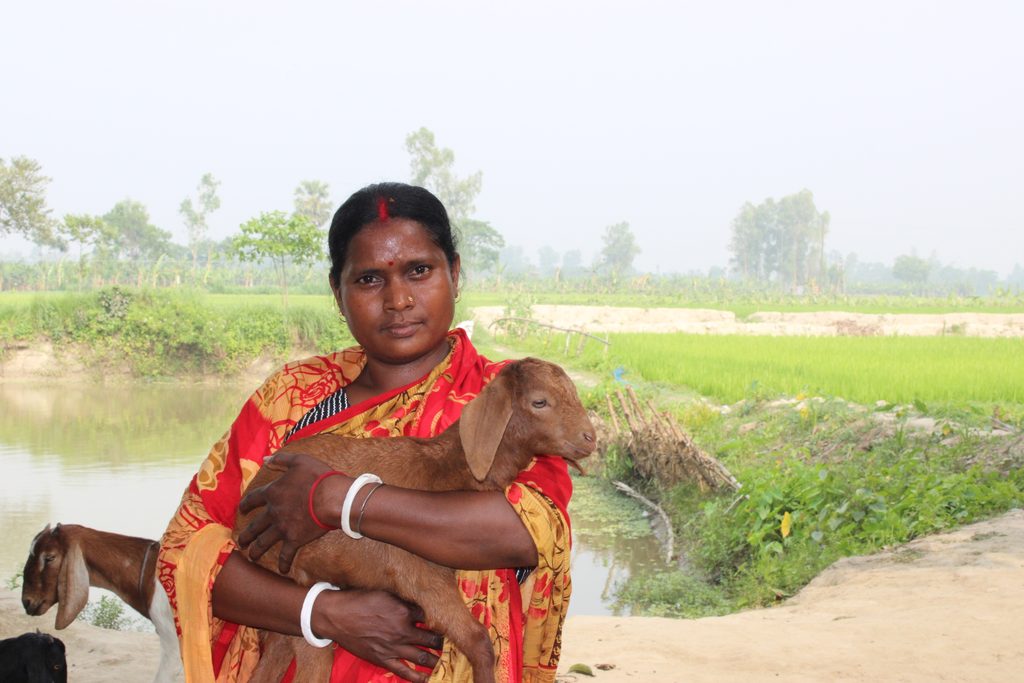
Among its beneficiaries is Putul Kujur, a 35-year-old woman from Badalgachi, Naogaon. Previously dependent on her husband’s income and rarely included in important family decisions, Putul began her business after receiving livestock training and four goats through the programme.
What started as a small livelihood activity has since grown. Putul has purchased a cow and hopes to expand her livestock business further. She also reports a change in her confidence and standing within the family, where her opinions are now given greater consideration.
“We have two hands and two feet just like men; if they can do it, so can we,” she says.
For Putul, the opportunity to earn has brought something beyond financial support: greater confidence in her abilities and a stronger voice in decisions affecting her life.
Creating Opportunities for Women Often Overlooked
For other women, the challenge begins with gaining access to training and employment opportunities that many people take for granted.
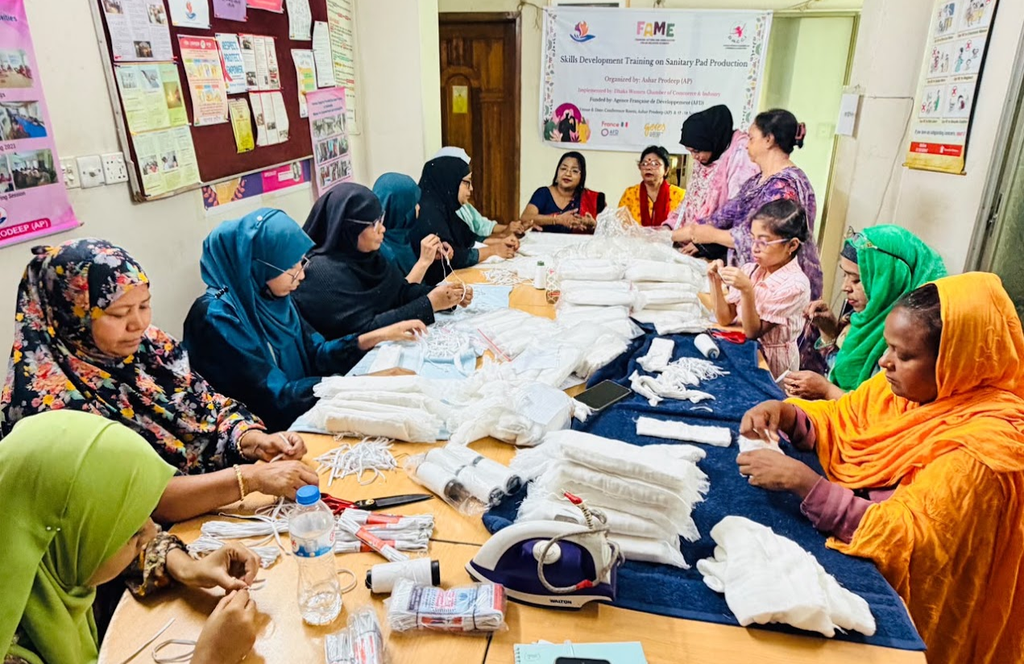
In Dhaka, Ashar Prodeep, a women-led organisation supporting women living with HIV, is developing livelihood opportunities for women who frequently face stigma and economic exclusion.
In September 2026, nine women completed training in sanitary pad production at its Dhaka office, learning practical production techniques and receiving starter kits to continue developing their skills. The organisation has also enrolled nine family members of women living with HIV in caregiver training, which began in October 2026, offering another potential source of household income.
With an overall target of 100 women living with HIV, the initiative plans to provide further mentoring and market connections. By involving family members as well, Ashar Prodeep is working to improve economic opportunities not only for individual women but also for the households that depend on them.
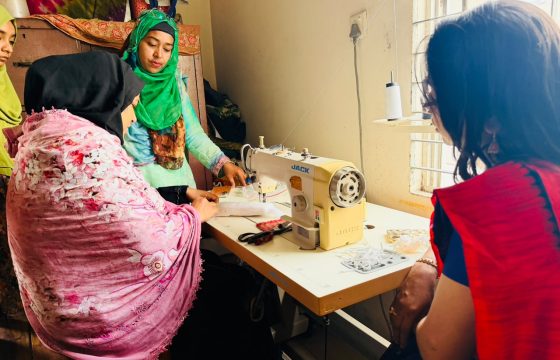
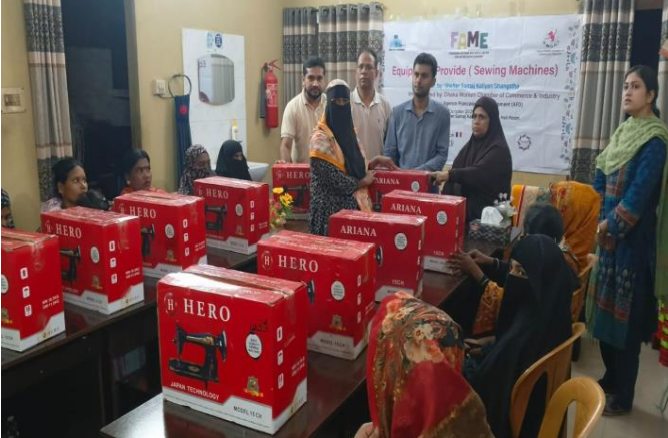
Similarly, Shelter Samaj Kallyan Shangstha is supporting women and marginalized community with limited access to economic resources. One woman, who previously lacked the skills and equipment to earn independently, received sewing training and a sewing machine through FAME. She has since begun sewing work, creating an opportunity to contribute to her family’s income.
These initiatives recognise that women face different barriers to earning a livelihood. For some, a small investment in equipment is enough to help an existing business grow. For others, the first opportunity to learn a trade can provide the foundation for future employment or entrepreneurship.
In Jashore, Ranagati Samaj Kallyan Sangstha (RSKS) also brings experience from its earlier livelihood programmes, which helped rural women establish small poultry and dairy businesses through training and start-up support. One beneficiary, Toma, received poultry-rearing training and a small grant and now earns approximately BDT 8,000–10,000 per month from her home-based enterprise.
“I am successfully bearing my children’s educational expenses and supporting my husband to run our family well,” she shares.
Supporting Women Beyond Their Businesses
The work of FAME’s CSO partners also reflects an understanding that women need more than training or financial assistance to sustain their livelihoods.
In Karwan Bazar, for example, CWCS has helped women traders engage with market authorities on issues affecting their working conditions. It has also established Shishuder Pathshala, an educational centre supporting 30 children of women traders, recognising the responsibilities women continue to manage alongside their businesses.
Elsewhere, partners such as CWFD combine business development with rights awareness and leadership training, recognising that earning an income is closely connected to women’s ability to make decisions and participate more fully in family and community life.
These approaches are important because women’s circumstances differ. Whether they are selling vegetables in a crowded market, raising livestock at home or learning a new vocational skill, women need opportunities that reflect both their ambitions and the challenges they face.
As the world marks Women’s Entrepreneurship Day on 19 November, the experiences of Nargis, Putul and other women supported by FAME’s partners offer a glimpse of what practical, locally led support can achieve.
For Nargis, progress means being better able to provide for her daughters’ education. For Putul, it means growing her business and having a greater say in family decisions. Their stories show that women’s entrepreneurship is not only about earning an income, but also about having more choices, greater confidence and the opportunity to shape their own futures.